Customs duties are the responsibility of customers, but standard logistics support DDP to most countries, duty-free such as US, DE, UK, CA, FR, IT, PL, AT, JP…


Introduction
As fiber broadband becomes faster and more widely available, more homes, apartments, offices, villas, and hotels are upgrading from traditional Wi-Fi-only coverage to fiber-based indoor networking. One popular solution is FTTR, also known as Fiber to the Room.
FTTR brings optical fiber closer to each room, helping improve broadband stability, reduce Wi-Fi dead zones, and support high-speed internet access across larger indoor spaces. However, one common problem remains: how can installers run fiber cable indoors without damaging decoration or leaving visible cable traces?
This is where FTTR Transparent Fiber Optic Cable becomes useful.
A transparent Indoor Fiber Cable is designed to be discreet, flexible, and easy to route along walls, corners, ceilings, baseboards, and indoor decoration edges. Compared with traditional colored indoor fiber cable, an Invisible Fiber Optic Cable can significantly reduce visual impact after installation.
For home broadband upgrades, FTTR deployment, hotel networking, and office fiber extension, transparent fiber cable provides a cleaner and more practical indoor cabling option.
What Is FTTR Transparent Fiber Optic Cable?
FTTR Transparent Fiber Optic Cable is a type of indoor fiber cable designed for low-visibility fiber installation. It usually features a transparent or colorless outer structure, allowing it to blend more naturally into indoor environments.
Instead of using thick or brightly colored cable, transparent fiber cable is easier to hide along:
- White walls
- Ceiling edges
- Door frames
- Corners
- Skirting boards
- Cabinets
- Decoration lines
- Indoor cable routes
This makes it especially suitable for FTTR and FTTH indoor extension projects where the customer wants fiber performance without messy visible cabling.
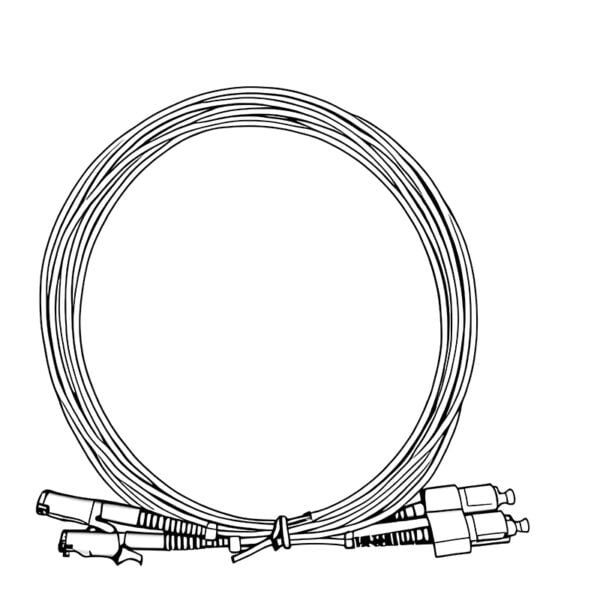
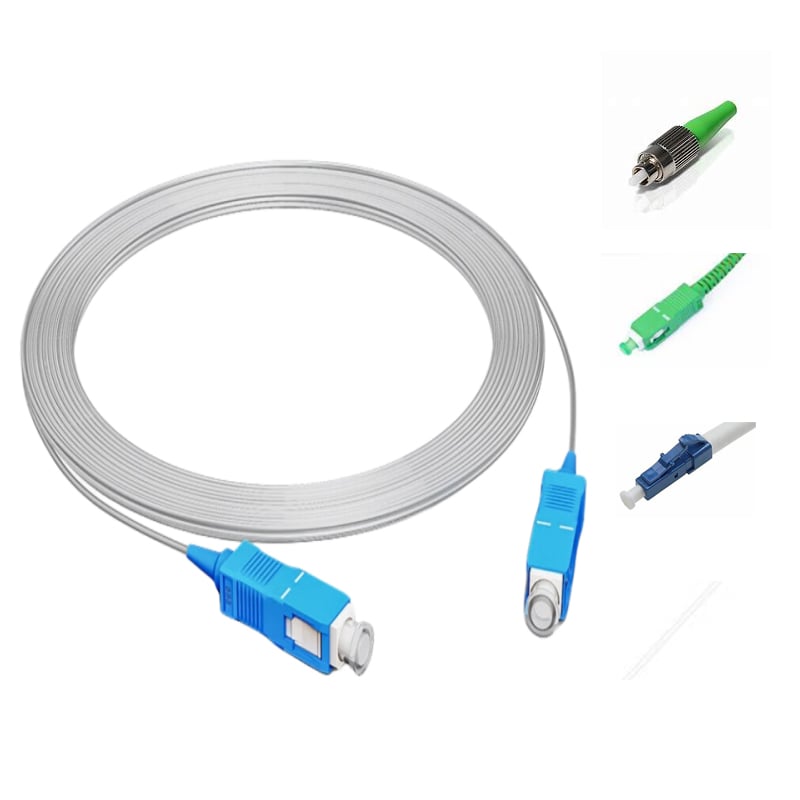
The Luleey FTTR Transparent Fiber Optic Cable is built with G657A2 Indoor Fiber Cable construction, a compact 0.9mm cable design, and multiple connector options such as SC/APC, SC/UPC, FC/APC, LC/UPC, and headless configurations.
Recommended Product:
Luleey FTTR Transparent Fiber Optic Cable
https://www.luleey.com/product/fttr-indoor-transparent-fiber-optic-cable/
Why Indoor Fiber Cabling Is Becoming More Important
Traditional broadband installation usually brings fiber to one location, such as a living room, entrance box, or telecom cabinet. From there, the home network depends on Wi-Fi, Ethernet cables, mesh routers, or powerline adapters.
This setup works for small spaces, but it can become less effective in larger homes or complex buildings.
Common problems include:
- Weak Wi-Fi signal in bedrooms
- Unstable video calls
- Slow internet in remote rooms
- Poor gaming latency
- Thick walls blocking wireless signals
- Difficult Ethernet cable routing
- Messy visible indoor cables
FTTR helps solve this by extending fiber closer to each room. Instead of relying only on wireless coverage, fiber provides a stable high-speed backbone for indoor broadband distribution.
But because FTTR requires indoor cable routing, cable appearance becomes very important. Customers want better broadband, but they usually do not want obvious fiber cables running across walls.
That is why Transparent Fiber Optic Cable is becoming more popular for indoor broadband installation.
Why Use Transparent Fiber Cable for Home Broadband?
The biggest advantage of transparent fiber cable is simple: it is much less visible after installation.
For residential and commercial environments, appearance matters. A standard black, yellow, or white cable may still be noticeable on walls or decoration surfaces. A transparent cable is not completely invisible, but it is easier to conceal and less disruptive to indoor design.
Key benefits include:
- Cleaner indoor appearance
- Less visible cable routing
- Easier installation along wall edges
- Better fit for decorated rooms
- Reduced need for drilling or wall modification
- Flexible installation for FTTR and FTTH extension
- Suitable for quick broadband upgrades
For installers, an Invisible Fiber Optic Cable can also reduce customer complaints about messy wiring. For customers, it provides a more acceptable way to upgrade fiber broadband without damaging interior decoration.
Why G657A2 Indoor Fiber Cable Matters
Indoor fiber installation is different from outdoor fiber deployment. Indoor cable often needs to pass around corners, door frames, narrow wall gaps, cabinets, and furniture edges.
If a standard fiber cable is bent too tightly, optical signal loss can increase. In severe cases, the fiber link may become unstable or fail completely.
A G657A2 Indoor Fiber Cable is designed for better bending performance. This makes it more suitable for indoor environments where flexible routing is required.
For FTTR installation, a bend-resistant fiber cable is important because indoor cable routes are rarely perfectly straight. Installers often need to route cable around:
- Wall corners
- Ceiling edges
- Door frames
- Baseboards
- TV cabinets
- Router positions
- Optical sockets
- Indoor terminals
Using a Low Bend Loss Fiber Cable helps reduce signal degradation caused by normal indoor bending and routing.
Common Indoor Installation Scenarios
FTTR Transparent Fiber Optic Cable can be used in many indoor broadband and optical network scenarios.
1. Home FTTR Installation
In a home FTTR network, fiber may need to connect the main optical gateway to different rooms. Transparent fiber cable can be routed along wall edges or skirting boards to reduce visible wiring.
Typical rooms include:
- Living room
- Bedroom
- Study room
- Gaming room
- Home office
- Media room
2. Apartment Fiber Extension
Apartments often have limited cabling space. Drilling walls or installing visible ducts may not be allowed or may affect the decoration.
Transparent fiber cable provides a cleaner way to extend fiber from the entrance point to the router or optical socket.
3. Hotel Room Broadband
Hotels need stable internet in each room, but visible cabling can affect the room appearance. Transparent fiber cable is suitable for low-visibility indoor routing in hotel corridors, guest rooms, and service areas.
4. Office Fiber Cabling
Offices may need fiber connections between network rooms, work areas, meeting rooms, and equipment cabinets. Transparent fiber cable helps keep cabling cleaner in visible indoor areas.
5. Villa and Large Home Networking
Large homes often have Wi-Fi coverage problems. FTTR can improve network stability, while transparent cable helps maintain interior aesthetics.
How to Hide Indoor Fiber Cable Properly
A good indoor fiber installation is not just about choosing the right cable. Routing method also matters.
Here are practical installation tips for hiding indoor fiber cable.
1. Route Along Wall Edges
Wall edges are one of the best places to hide transparent fiber cable. The cable can follow the natural lines of the room, making it less noticeable.
Good locations include:
- Ceiling-wall corners
- Wall-floor edges
- Door frame edges
- Window frame edges
- Cabinet edges
2. Use Baseboards and Skirting Lines
Baseboards are useful for hiding fiber cable because they already create a visual boundary along the wall. A transparent cable routed along the top or bottom of the baseboard is much less noticeable.
3. Avoid Sharp Bends
Even though G657A2 Fiber is bend-resistant, sharp bends should still be avoided. Smooth routing helps maintain stable optical transmission and reduces the risk of future cable damage.
4. Keep the Cable Clean and Straight
A transparent cable looks better when it is routed neatly. Avoid twisted, loose, or hanging cable sections. Clean cable routing improves both appearance and reliability.
5. Choose the Right Connector
Different broadband devices and optical sockets use different connector types. For FTTR and FTTH networks, SC/APC is commonly used, but some devices may require SC/UPC, LC/UPC, FC/APC, or headless cable.
Before ordering, always confirm the connector type required by:
- ONT
- ONU
- Optical router
- Fiber wall socket
- Optical distribution box
- FTTR gateway
- Indoor fiber terminal
Connector Options for FTTR Transparent Fiber Cable
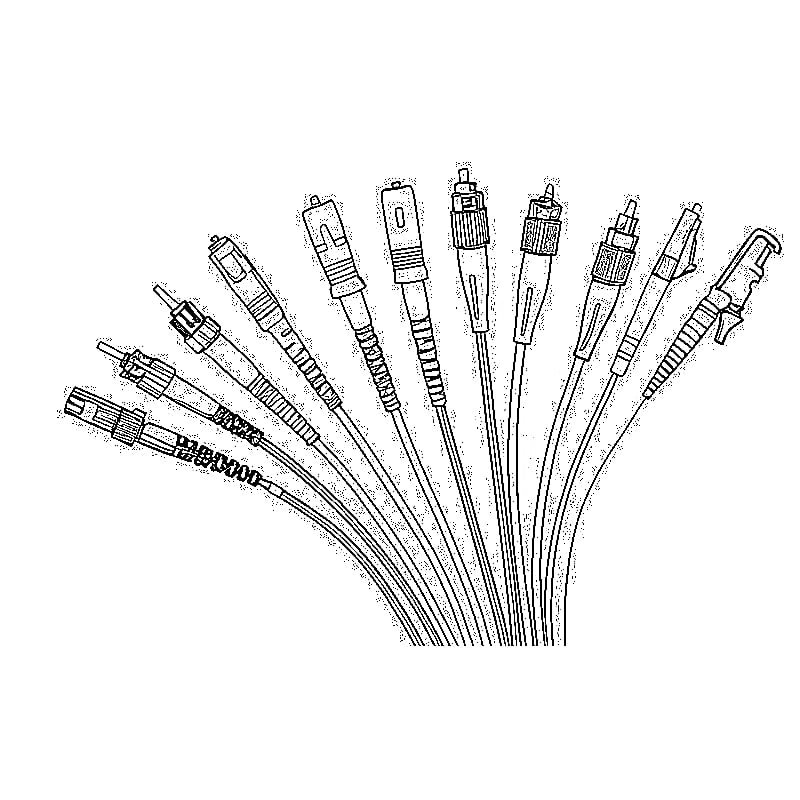
The Luleey FTTR Transparent Fiber Optic Cable supports multiple connector options for different installation needs.
| Connector Option | Typical Application |
|---|---|
| SC/APC | FTTH, FTTR, PON networks, low-reflection links |
| SC/UPC | Standard indoor fiber connections |
| LC/UPC | Compact optical devices and fiber equipment |
| FC/APC | Telecom and optical test equipment |
| Headless | Field termination or custom installation |
For most FTTR and FTTH broadband installations, SC/APC is commonly used because many PON systems use APC interfaces. However, installers should always check the actual device interface before selecting the cable.
Transparent Fiber Cable vs Traditional Indoor Fiber Cable
Both transparent fiber cable and traditional indoor fiber cable can be used for indoor optical transmission, but they serve different installation priorities.
| Cable Type | Best For |
|---|---|
| Transparent Fiber Optic Cable | Low-visibility indoor FTTR and FTTH installation |
| Traditional Indoor Fiber Cable | General indoor cabling where appearance is less important |
| Armored Indoor Fiber Cable | Higher mechanical protection |
| Drop Cable | FTTH access and building entry cabling |
Choose transparent fiber cable when appearance and clean installation are important.
Choose traditional indoor cable when the cable is hidden inside conduits, trays, or telecom boxes.
Choose armored cable when extra protection is required.
Where FTTR Transparent Fiber Cable Works Best
FTTR Transparent Fiber Optic Cable is best used in indoor areas where the cable may be visible after installation.
Recommended locations include:
- Home walls
- Apartment rooms
- Hotel rooms
- Office interiors
- Customer-facing areas
- Villa indoor cabling
- Router-to-room fiber paths
- FTTH extension routes
- Optical socket relocation
- Indoor broadband upgrade projects
It is especially useful when the customer wants a clean indoor installation without adding visible cable ducts or large cable covers.
Recommended Product: Luleey FTTR Transparent Fiber Optic Cable
For installers, ISPs, system integrators, and home broadband users, Luleey provides an FTTR Transparent Fiber Optic Cable designed for clean indoor optical network deployment.
Key features include:
- Transparent and colorless cable appearance
- G657A2 bend-resistant fiber
- Compact 0.9mm cable diameter
- Low insertion loss
- Suitable for FTTR and FTTH indoor extension
- Multiple connector options
- Flexible length options
- Factory-tested optical performance
View Product:
https://www.luleey.com/product/fttr-indoor-transparent-fiber-optic-cable/
This FTTR Fiber Cable is suitable for home broadband, office fiber cabling, hotel room networking, apartment installation, and low-visibility indoor optical network deployment.
FAQ
What is FTTR Transparent Fiber Optic Cable?
FTTR Transparent Fiber Optic Cable is an indoor optical fiber cable designed for fiber-to-the-room installation. It uses a transparent or colorless cable appearance to reduce visible wiring in indoor environments.
Is transparent fiber cable really invisible?
It is not completely invisible, but it is much less noticeable than traditional colored indoor fiber cable. That is why it is often called Invisible Fiber Optic Cable.
What is G657A2 Indoor Fiber Cable?
G657A2 Indoor Fiber Cable uses bend-resistant fiber designed for indoor routing around corners, wall edges, and narrow installation paths.
Can this cable be used for FTTH?
Yes. It can be used for FTTH indoor extension, optical socket relocation, home broadband fiber wiring, and indoor fiber routing.
What connector should I choose for FTTR?
SC/APC is commonly used in many FTTR and FTTH PON networks, but the correct connector depends on the optical equipment. Always confirm the required connector before ordering.
Can I use transparent fiber cable in an office?
Yes. Transparent fiber cable is suitable for office indoor fiber cabling, meeting rooms, network rooms, and visible indoor installation areas.
Why is low bend loss important?
Low bend loss helps maintain stable optical transmission when the cable is routed around indoor corners, walls, and narrow paths.
Is this cable suitable for hotel broadband installation?
Yes. It is suitable for hotel rooms and indoor environments where clean appearance and stable fiber broadband are both important.
Can Luleey provide custom lengths?
Yes. Luleey can provide different cable lengths and connector configurations based on installation requirements.
Conclusion
FTTR is becoming an important solution for improving home broadband, office networking, hotel internet access, and indoor fiber coverage. However, successful FTTR installation is not only about speed. Indoor appearance also matters.
A FTTR Transparent Fiber Optic Cable provides a cleaner and more practical way to route fiber indoors. With transparent appearance, G657A2 bend-resistant fiber, compact cable structure, and multiple connector options, it helps installers deploy fiber broadband while reducing visual impact.
For FTTR, FTTH extension, home broadband upgrades, and indoor optical network deployment, Luleey FTTR Transparent Fiber Optic Cable is a reliable choice for clean, flexible, and stable indoor fiber cabling.

 SFP/SFP+ (1G/2.5G/5G/10G)
 SFP-T (1G/2.5G/10G)
 AOC Cable 10G/25G/40G/100G
 DAC Cable 10G/25G/40G/100G
 QSFP28 QSFP+ SFP28 100G/40G/25G
 Copper to Fiber Media Converters
 Fiber Media Converter PCBA Board
 OEO Fiber Media Converters
 Serial to Fiber Media Converters
 Video to Fiber Media Converters
 1000M GPON/EPON ONU
 10G EPON ONU/XG-PON/XGS-PON
 2.5G GPON/XPON STICK SFP ONU
 POE GPON/EPON ONU
 Wireless GPON/EPON ONT
 EPON OLT
 GPON OLT
 SFP PON Module
 Industrial Switches
 Managed Switches
 POE Switches
 Unmanaged Switches
 MTP/MPO Fiber Cables
 Fiber Optic Cassettes
 Fiber Optic Loopback
 Optic Cables and Fiber Pigtails
 Optical Splitters and Splitter Box
 Fiber Flange Connectors
 Optical Adapters
 Optical Attenuator
 Quick Connector and Connector Panel
 CATV Amplifier
 CATV Optical Receiver
 Visual Fault Locator
 OTDR
OTDR Optical Power Meter
 Fiber Optic Identifier
 Fiber Optic Cleaners
 Fiber Cleavers & Fiber Strippers
 Copper Tools


