Customs duties are the responsibility of customers, but standard logistics support DDP to most countries, duty-free such as US, DE, UK, CA, FR, IT, PL, AT, JP…


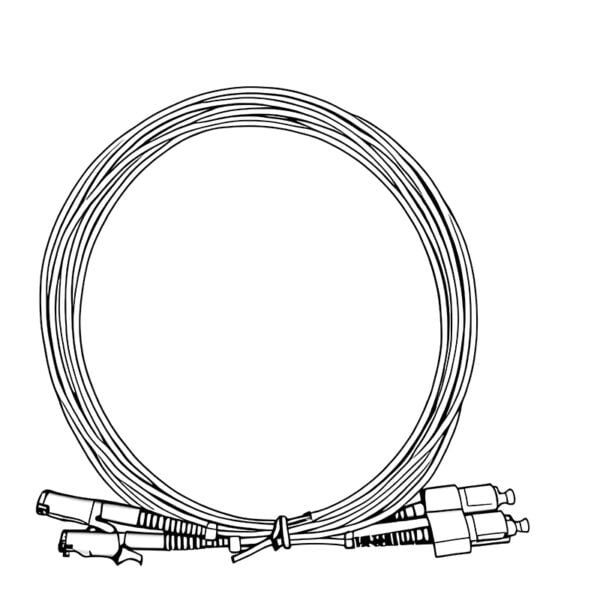
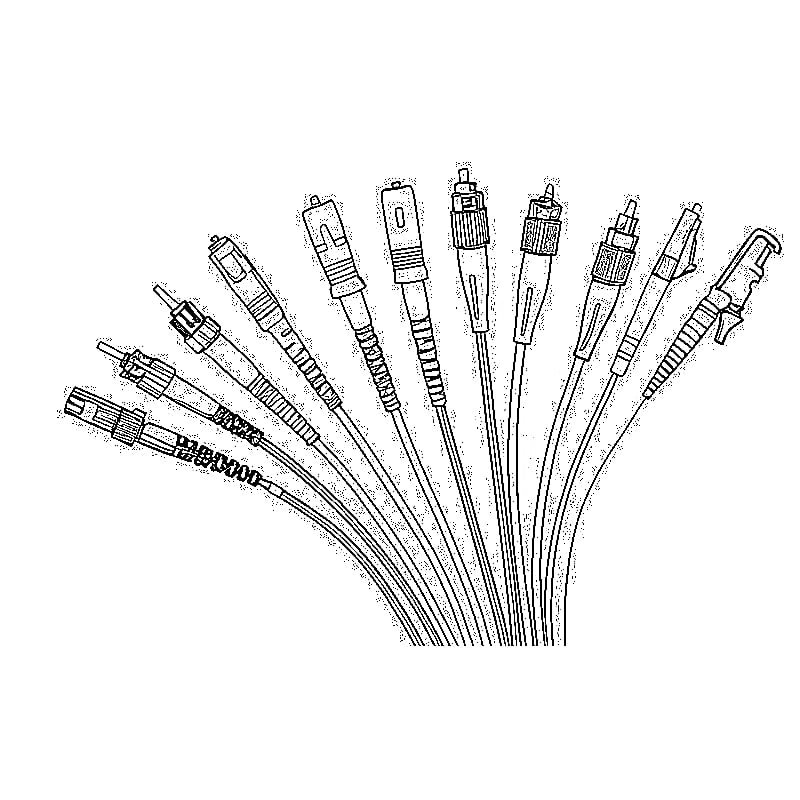
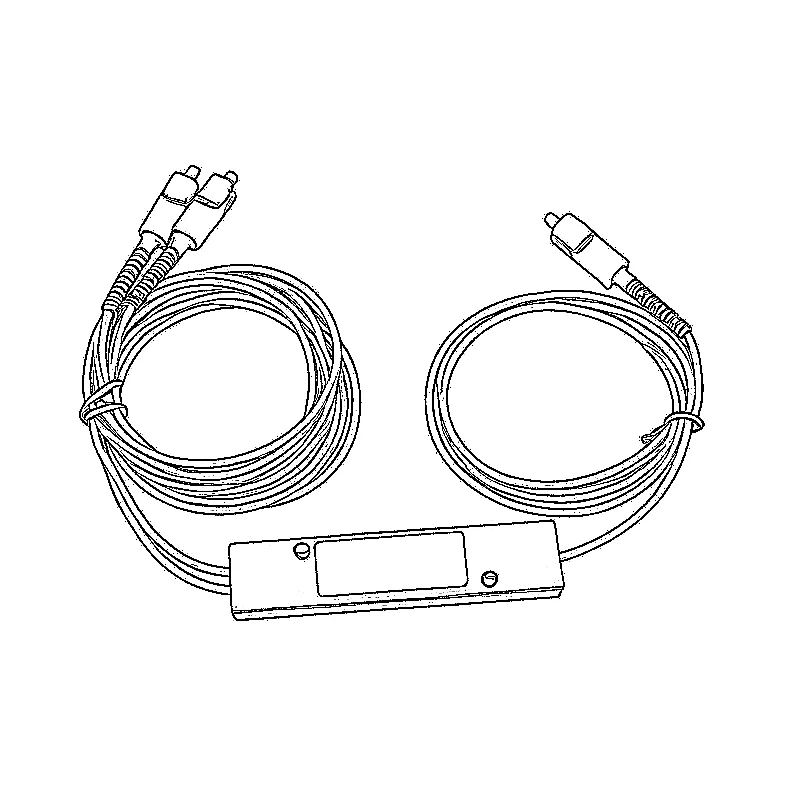
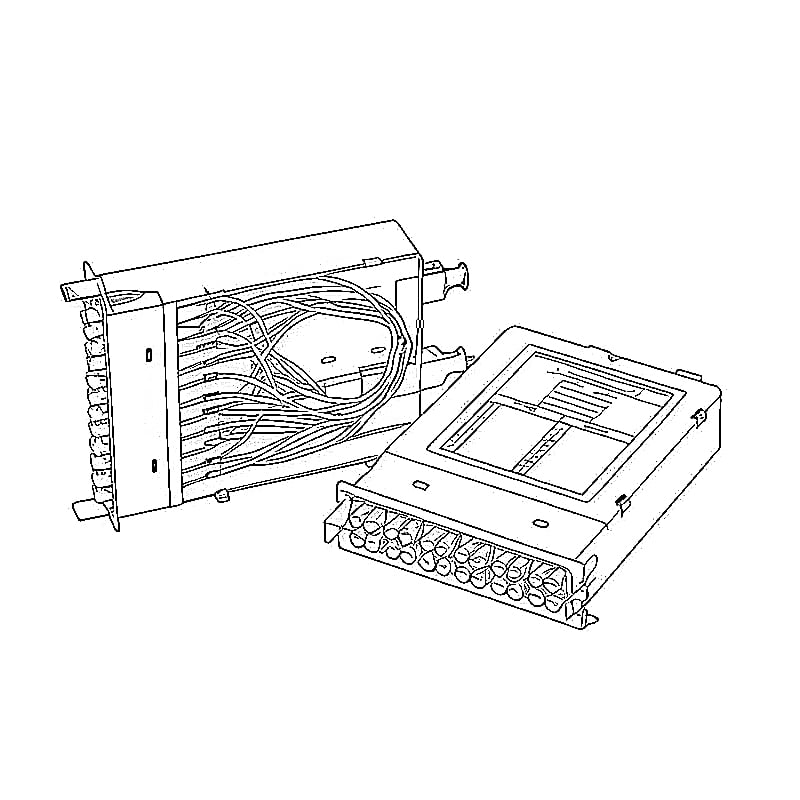

Buying an MTP/MPO fiber cable can look complicated.
You may see options like:
- 8 Fiber
- 12 Fiber
- OS2
- OM3
- OM4
- Male
- Female
- LC
- SC
- FC
- ST
- UPC
- APC
That is a lot of choices for one cable.
But in most cases, you do not need to understand every MPO standard before buying.
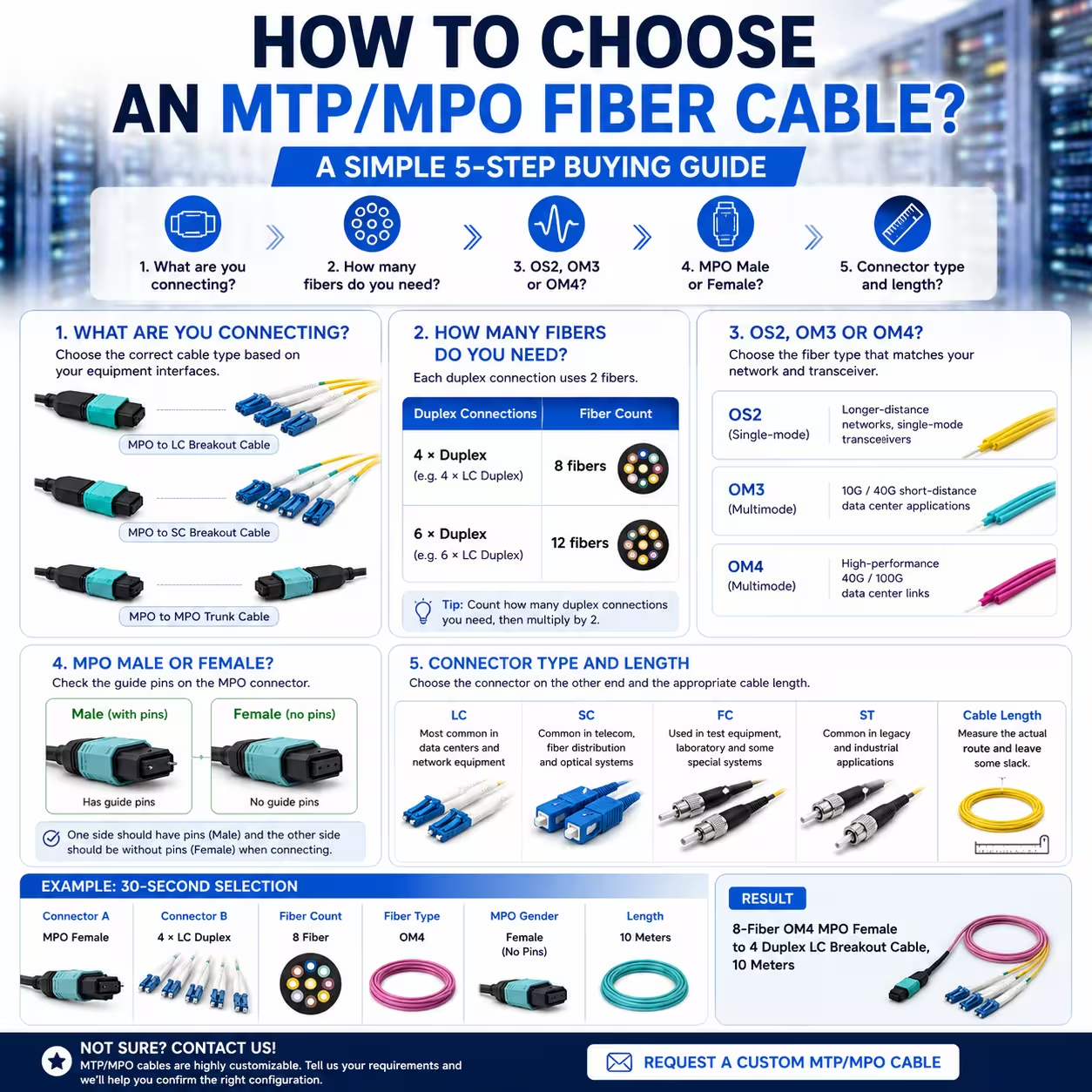
You only need to answer five simple questions:
- What are you connecting?
- How many fibers do you need?
- Do you need OS2, OM3 or OM4?
- Do you need MPO Male or Female?
- What connector and cable length do you need?
Let’s go through them one by one.
Step 1: What Are You Connecting?
Start with the easiest question:
What connector is on each end of your equipment?
Do not start by asking:
“Which MPO cable is the best?”
There is no single best MPO cable.
The right cable depends on what you want to connect.
For example:
Example 1: MPO to LC
Suppose your switch or patch panel has an MPO port, but the equipment on the other side uses LC connectors.
You may need:
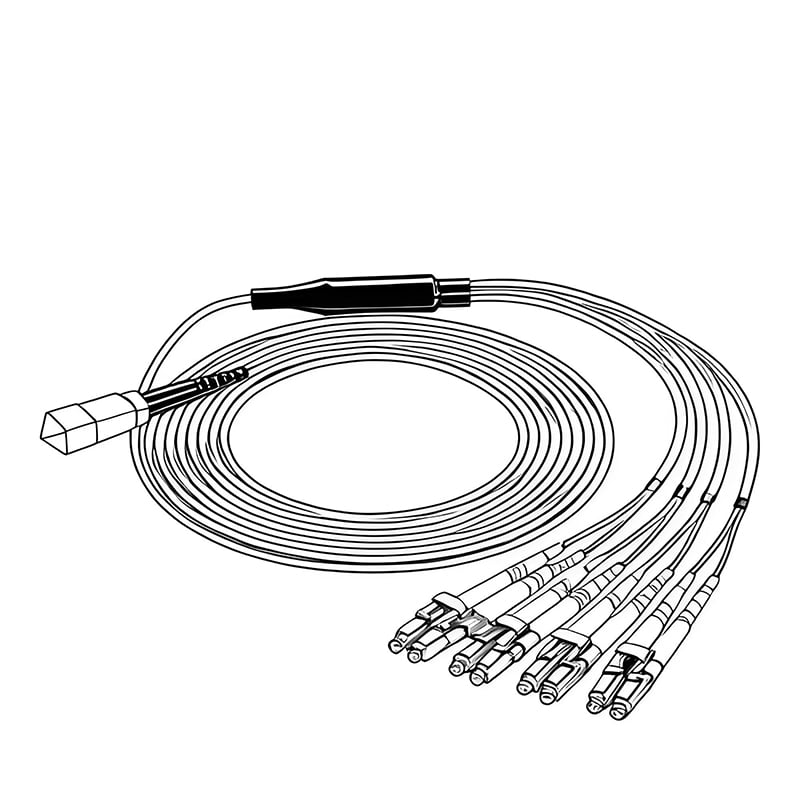
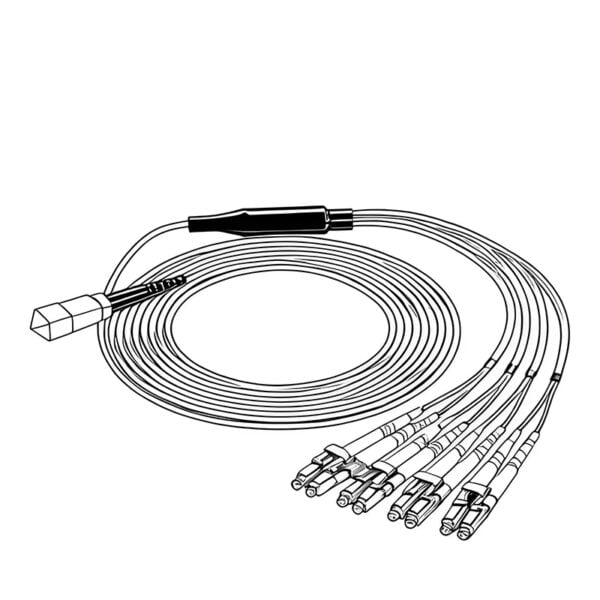
MPO to LC Breakout Cable
A common configuration is:
1 × MPO → 4 × Duplex LC
This allows one MPO connection to break out into several LC connections.
Example 2: MPO to SC
Suppose your equipment uses SC connectors instead.
You may need:
MPO to SC Breakout Cable
This is common in telecom, fiber distribution and some optical equipment.
Example 3: MPO to MPO
If both devices use MPO interfaces, you may simply need an:
MPO to MPO Trunk Cable
So the first rule is simple:
Check the connector on Device A and Device B before choosing anything else.
Step 2: Do You Need 8 Fibers or 12 Fibers?
This is where many beginners get confused.
Fortunately, the math is easy.
A duplex optical connection normally uses:
2 fibers
One fiber transmits.
One fiber receives.
So if you need four duplex connections:
4 × 2 = 8 fibers
That means an 8-fiber MPO cable may be suitable.
Simple Example
You need:
1 × MPO → 4 × Duplex LC
Each Duplex LC uses two fibers.
So:
4 × 2 = 8 fibers
Result:
Choose an 8-fiber MPO breakout cable.
What if you need six duplex LC connections?
6 × 2 = 12 fibers
Then a 12-fiber MPO cable may be the better choice.
A very simple way to remember this is:
| Required Connections | Typical Fiber Count |
| 4 × Duplex LC | 8 fibers |
| 6 × Duplex LC | 12 fibers |
Of course, actual applications can vary, especially with parallel optics and special polarity designs.
But for a basic breakout cable, this simple rule works well.
Step 3: OS2 vs OM3 vs OM4 — Which One Do You Need?
Now choose the fiber type.
This sounds technical, but the basic idea is easy.
OS2
OS2 is single-mode fiber.
It is commonly used for:
- Longer-distance fiber links
- Single-mode SFP/SFP+ modules
- Telecom networks
- Campus networks
- Building-to-building connections
If your transceiver says something like:
1310nm
or:
Single Mode
you will often be looking at OS2 fiber.
OM3
OM3 is multimode fiber.
It is commonly used for shorter-distance high-speed links such as:
- Data centers
- Server rooms
- 10G Ethernet
- Short switch-to-switch connections
OM3 cables are often used with 850nm multimode transceivers.
OM4
OM4 is also multimode fiber.
It is similar to OM3, but it generally supports higher-performance multimode applications and longer reach for some high-speed standards.
It is common in:
- Data centers
- High-speed switching
- Server interconnects
- 40G / 100G multimode cabling systems
The important rule is:
Do not choose OM4 just because it sounds newer or better. Match the cable to your transceiver and existing network.
For example:
If your SFP+ module is:
10GBASE-SR, 850nm multimode
you will normally look at:
OM3 or OM4
If your transceiver is:
single-mode
you will normally look at:
OS2
A simple table:
| Fiber Type | Mode | Common Use |
| OS2 | Single-mode | Longer distance |
| OM3 | Multimode | Short high-speed links |
| OM4 | Multimode | Higher-performance data center links |
Step 4: MPO Male or Female?
This is one of the easiest ways to order the wrong MPO cable.
The difference is physical.
MPO Male
An MPO Male connector has guide pins.
MPO Female
An MPO Female connector does not have guide pins.
Simple enough.
You can remember it like this:
Male = Pins
Female = No Pins
Why do these pins matter?
The guide pins help align the multiple fibers inside the MPO connector.
Normally, when two MPO connectors are connected together, one side provides the guide pins and the other side accepts them.
So before ordering, check the MPO port or adapter already used in your equipment.
Do not assume Male is always better or Female is always better.
They are simply different connection types.
Step 5: Choose the Connector Type and Cable Length
Now you are almost done.
The final questions are:
What connector do I need on the other end?
and:
How long should the cable be?
Common breakout connector options include:
- LC
- SC
- FC
- ST
Each one is used in different types of fiber equipment.
MPO to LC
This is one of the most common breakout configurations.
It is often used for:
- Switches
- Optical transceivers
- Data center equipment
- Patch panels
Example:
MPO Female → 4 × Duplex LC
MPO to SC
Common in:
- Telecom equipment
- Fiber distribution
- Optical access systems
- Some test and transmission equipment
MPO to FC
FC connectors are often seen in:
- Test equipment
- Laboratory systems
- Measurement equipment
- Specialized optical systems
MPO to ST
ST is more common in:
- Older fiber networks
- Industrial systems
- Legacy installations
How Long Should the MPO Cable Be?
This part is easy, but do not underestimate it.
Measure the actual route.
Do not measure only the straight-line distance between two devices.
For example:
The two racks may be only 5 meters apart.
But the cable must travel:
Rack → cable tray → overhead route → second rack
The actual cable route may be 8 meters.
In that case, buying exactly 5 meters would be a mistake.
It is normally better to leave a reasonable amount of extra cable for installation and maintenance.
But do not buy an unnecessarily long cable either, especially in a crowded rack.
A Simple 30-Second MPO Cable Selection Example
Let’s put everything together.
Suppose you tell us:
I have one MPO port and want to connect it to four LC duplex interfaces. My transceivers are multimode and I need a 10-meter cable.
Now answer the five questions.
1. What are you connecting?
MPO → LC
2. How many fibers?
4 Duplex LC × 2 fibers = 8 fibers
3. Fiber type?
Multimode → OM3 or OM4, depending on your system.
Let’s say OM4.
4. MPO gender?
Your equipment requires Female.
5. Length?
10 meters.
So the final requirement becomes:
8-Fiber OM4 MPO Female to 4 Duplex LC Breakout Cable, 10m
That sounds much less complicated now.
Another Example: Single-Mode MPO to SC
Suppose your requirement is:
- Single-mode network
- 12 fibers
- MPO Male
- SC/APC breakout
- 20 meters
Then you can describe the cable as:
12-Fiber OS2 MPO Male to SC/APC Breakout Cable, 20m
Once you know these basic parameters, custom MPO cabling becomes much easier.
What About MPO Polarity?
You may also see terms like:
- Type A
- Type B
- Type C
- Key Up
- Key Down
These refer to how the fibers are arranged from one end of the cable to the other.
Polarity is important, especially in more complex data center and parallel-optics systems.
But if you are a beginner, do not let this stop you from choosing a cable.
The easiest solution is:
Tell the supplier what devices and interfaces you are connecting.
Then the correct polarity can be confirmed before production.
For more complex MPO installations, polarity should always be checked carefully rather than guessed.
MTP vs MPO: Do I Need to Worry About It?
You may see both MTP and MPO used in product descriptions.
MPO is the general multi-fiber connector format.
MTP is a specific high-performance MPO connector design.
For many buyers, the important thing is not the name itself.
More important are:
- Fiber count
- Fiber type
- Male or Female
- Connector type
- Polarity
- Cable length
- Application
If you are replacing an existing cable, match the specifications of the current installation.
Common Mistakes When Buying an MPO Cable
Here are some of the most common problems.
Buying the Wrong Fiber Type
For example:
Using an OM4 multimode cable with a single-mode optical system.
Check whether your network uses single-mode or multimode first.
Buying the Wrong Fiber Count
If you need six duplex connections but buy an 8-fiber cable, you will not have enough fibers.
Count the connections before ordering.
Choosing the Wrong MPO Gender
Male and Female MPO connectors are not interchangeable in every setup.
Check whether the existing connector has pins.
Ignoring Polarity
The connectors may physically fit, but incorrect fiber mapping can prevent the link from working correctly.
Buying the Wrong Breakout Connector
Do not order LC because it is common.
Check what is actually on your equipment.
You may need:
SC, FC or ST instead.
How to Choose an MTP/MPO Fiber Cable: Quick Checklist
Before ordering, confirm these parameters:
| Question | Your Answer |
| Connector A | MPO / MTP |
| Connector B | LC / SC / FC / ST / MPO |
| Fiber Count | 8 / 12 / other |
| Fiber Type | OS2 / OM3 / OM4 |
| MPO Gender | Male / Female |
| Connector Polish | UPC / APC if applicable |
| Polarity | Type A / B / C if required |
| Cable Length | ___ meters |
| Application | Switch / data center / telecom / test equipment |
If you can answer these questions, you are already very close to choosing the correct cable.
Can’t Find the Exact MTP/MPO Cable You Need?
This is normal.
MTP/MPO fiber cables are highly customizable products.
You may need a combination such as:
- 8-fiber or 12-fiber
- OS2, OM3 or OM4
- Male or Female MPO
- LC, SC, FC or ST breakout
- UPC or APC
- Different cable lengths
- Specific polarity
Sometimes the exact combination you need will not appear as a standard product option.
In that case, send us the basic information about the equipment at both ends.
You do not need to know every technical term.
Even something as simple as:
“This side is MPO, the other side has four LC duplex ports, and the link is multimode.”
is already enough information to start confirming the correct configuration.
Need a special configuration? Request a Custom MTP/MPO Fiber Cable.
Final Answer
Choosing an MTP/MPO fiber cable is much easier when you stop looking at all the options at once.
Just answer five questions:
1. What are you connecting?
2. How many fibers do you need?
3. OS2, OM3 or OM4?
4. MPO Male or Female?
5. What connector and cable length do you need?
For example:
MPO → 4 Duplex LC
8 fibers
OM4
Female MPO
10 meters
becomes:
8-Fiber OM4 MPO Female to 4 Duplex LC Breakout Cable, 10m
Once you break the selection process into small steps, even a highly customized MPO cable becomes quite simple.
FAQ
Daniel asks: Should I choose an 8-fiber or 12-fiber MPO cable?
It depends on your application. For example, four duplex LC connections normally use eight fibers, while six duplex LC connections use twelve fibers.
Michael asks: Is OM4 always better than OM3?
Not necessarily. OM4 is designed for higher-performance multimode applications, but you should choose a cable that matches your transceivers, transmission distance and existing fiber infrastructure.
Alex asks: How can I tell if an MPO connector is Male or Female?
An MPO Male connector has guide pins. An MPO Female connector does not have guide pins.
Thomas asks: Can I connect MPO directly to LC?
Not with a normal adapter because MPO and LC are different connector formats. You can use an MPO-to-LC breakout cable to convert one multi-fiber MPO connection into multiple LC connections.
Kevin asks: What is the difference between MPO to MPO and MPO breakout cable?
An MPO-to-MPO cable has an MPO connector on both ends and is commonly used as a trunk connection. An MPO breakout cable has MPO on one side and individual connectors such as LC or SC on the other.
James asks: What information should I provide for a custom MPO cable?
The most useful information is the connector type on both ends, fiber count, OS2/OM3/OM4 fiber type, MPO Male/Female, cable length and polarity if known.
Robert asks: What if I don’t know the MPO polarity?
Send the equipment model, existing cable information or photos of the current connection. The cable configuration should be confirmed before ordering rather than guessing the polarity.
Related Products
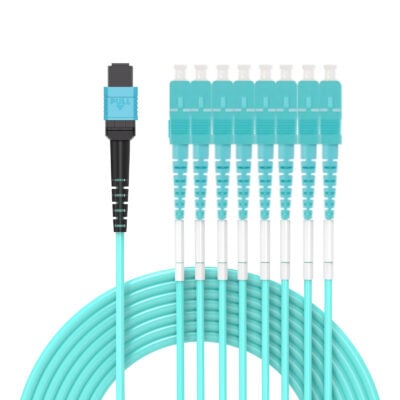
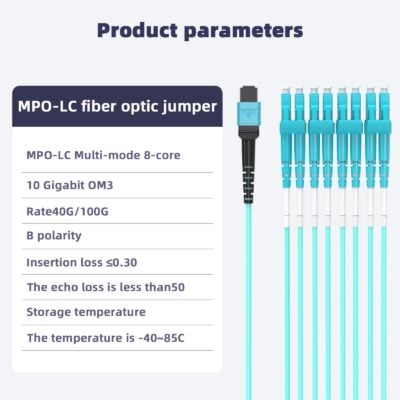
MPO to SC OM3 Cable, 8 Fiber Multimode MPO/MTP to SC Breakout Cable
EUR €31.14 EUR €61.42Price range: EUR €31.14 through EUR €61.42Tags: 8 SC, Breakout Cable, Data Center Cabling, MM, MPO, MPO Cable, MPO to SC, OM3, OM3 Fiber, SC Connector
 SFP/SFP+ (1G/2.5G/5G/10G)
 SFP-T (1G/2.5G/10G)
 AOC Cable 10G/25G/40G/100G
 DAC Cable 10G/25G/40G/100G
 QSFP28 QSFP+ SFP28 100G/40G/25G
 Copper to Fiber Media Converters
 Fiber Media Converter PCBA Board
 OEO Fiber Media Converters
 Serial to Fiber Media Converters
 Video to Fiber Media Converters
 1000M GPON/EPON ONU
 10G EPON ONU/XG-PON/XGS-PON
 2.5G GPON/XPON STICK SFP ONU
 POE GPON/EPON ONU
 Wireless GPON/EPON ONT
 EPON OLT
 GPON OLT
 SFP PON Module
 Industrial Switches
 Managed Switches
 POE Switches
 Unmanaged Switches
 MTP/MPO Fiber Cables
 Fiber Optic Cassettes
 Fiber Optic Loopback
 Optic Cables and Fiber Pigtails
 Optical Splitters and Splitter Box
 Fiber Flange Connectors
 Optical Adapters
 Optical Attenuator
 Quick Connector and Connector Panel
 CATV Amplifier
 CATV Optical Receiver
 Visual Fault Locator
 OTDR
OTDR Optical Power Meter
 Fiber Optic Identifier
 Fiber Optic Cleaners
 Fiber Cleavers & Fiber Strippers
 Copper Tools


